The Blueprint for Trillion-Dollar Visual Technology And AI Opportunities in Legacy Industry Automation
/At this year’s invite-only LDV Capital Annual General Meeting (AGM) in May 2026, our Principal, Ash Cleary, presented a keynote on visual technology & AI opportunities to unlock the automation of legacy industries. We’re excited to share a few of these trends with our wider LDV community.

Ash Cleary, Principal at LDV Capital ©Robert Wright/LDV Capital
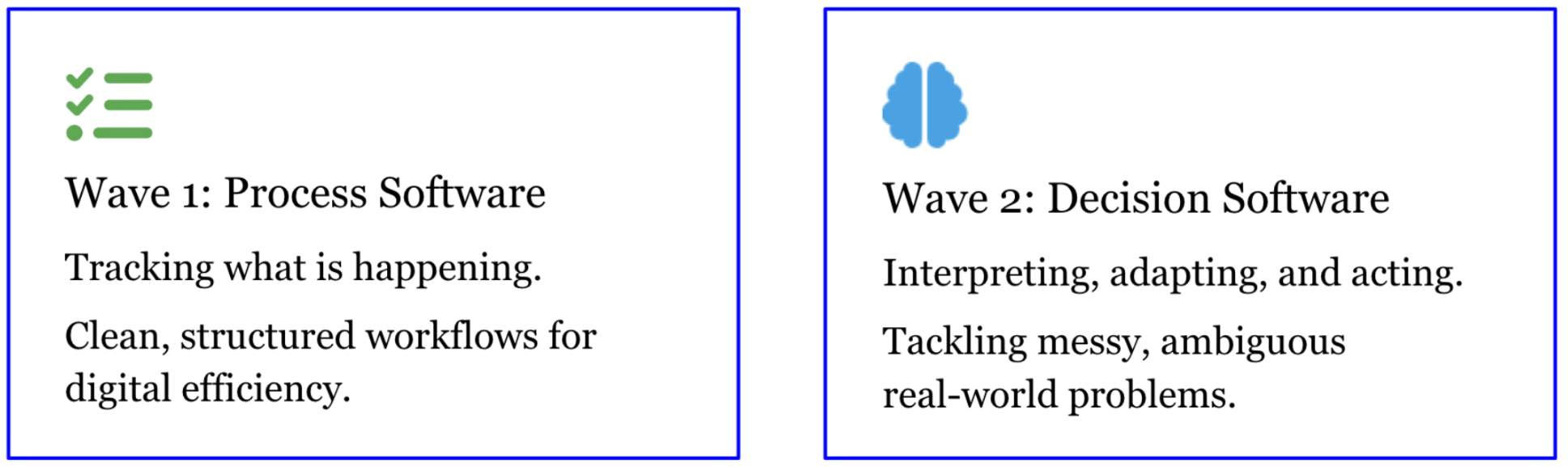
Over the past decade, the global business landscape witnessed the emergence of Wave 1 legacy industry automation: the digitization of workflows. Enterprise giants like UiPath, Procore, and Flexport built multi-billion-dollar businesses by targeting fragmented, manual, and paper-driven processes, transforming them into clean, structured digital systems of record. They answered a fundamental question for heavy industries: How do we track what just happened?
But the limits of elementary digitization have been reached. Today, we are entering Wave 2 legacy industry automation: intelligent automation, a paradigm shift that is fundamentally different from its predecessor. Wave 2 is not about force-fitting clean, rigid workflows into unpredictable environments; it is about enabling software to reason through messy, ambiguous, real-world problems in dynamic physical settings.
In 2023, we wrote an article “Visual Data is the Crux of AI & Automation for the Future of All Industries” and we continue to see significant opportunities investing in teams advancing automation leveraging visual technologies and AI.
The primary market opportunity is shifting rapidly from process software to decision software. Wave 2 systems leverage advanced visual technology & AI to interpret, predict, and execute autonomous actions in real time, instead of just recording what happened.
At LDV Capital, we have had the same thesis since 2012: investing in people building businesses powered by visual technology & AI. Visual technology refers to any technology that captures, analyzes, filters, displays, or distributes visual data. Visual data can be any data across the light and electromagnetic spectrum from visible to ultraviolet, thermal, radar, LiDAR, MRI, spectroscopy, hyperspectral, ultrasound, and much more. To this day, we remain the only venture capital firm investing exclusively in people building businesses powered by visual tech & AI.
There are several industries that will deliver trillion-dollar opportunities leveraging intelligent automation powered by visual tech, including the following:
Logistics & Supply Chain
Construction
Manufacturing
Mining
Logistics & Supply Chain
Logistics is evolving from a reactive coordination problem into an autonomous intelligence layer for the movement of global physical goods. Historically, supply chains depended on fragmented visibility, manual tracking, and frantic human intervention to resolve inevitable disruptions. The next generation of infrastructure is moving toward "self-healing logistics," where software autonomously detects bottlenecks, reroutes inventory, and dynamically optimizes operations without human prompts.
@DHL
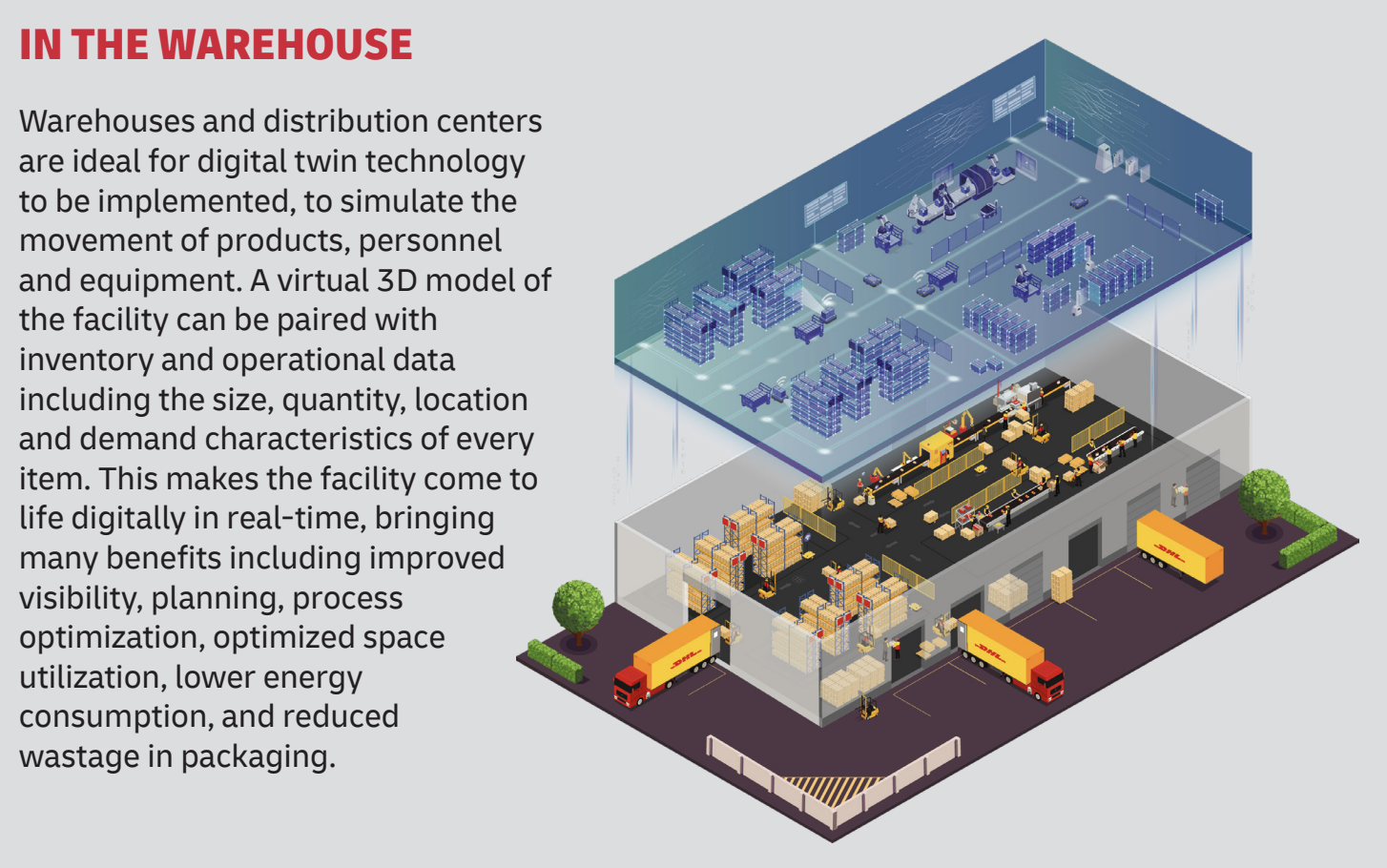
AI-powered computer vision systems can now localize assets inside complex facilities with centimeter-level precision. When combined with semantic digital twins—continuously updated 3D digital representations of physical networks—operators gain a real-time understanding of not just where an asset is, but its contextual state, environmental conditions, and operational dependencies.
In our 2019 LDV Insights Report, Visual Technologies Enable a Bright Future for Manufacturing & Logistics, we wrote that visual sensors, computer vision, autonomy, LiDAR and light based data would become critical infrastructure across manufacturing and logistics. Several of the core themes from that report are highly relevant today, including vision enabled robotics, computer vision for various workflows, vision based quality assurance and much more. Seven years later, these predictions continue to prove correct as visual technologies continue to gain adoption across manufacturing and logistics. These trends will become more important over time as logistics networks evolve from reactive systems of record into intelligent, autonomous systems capable of making real time operational decisions.
Construction
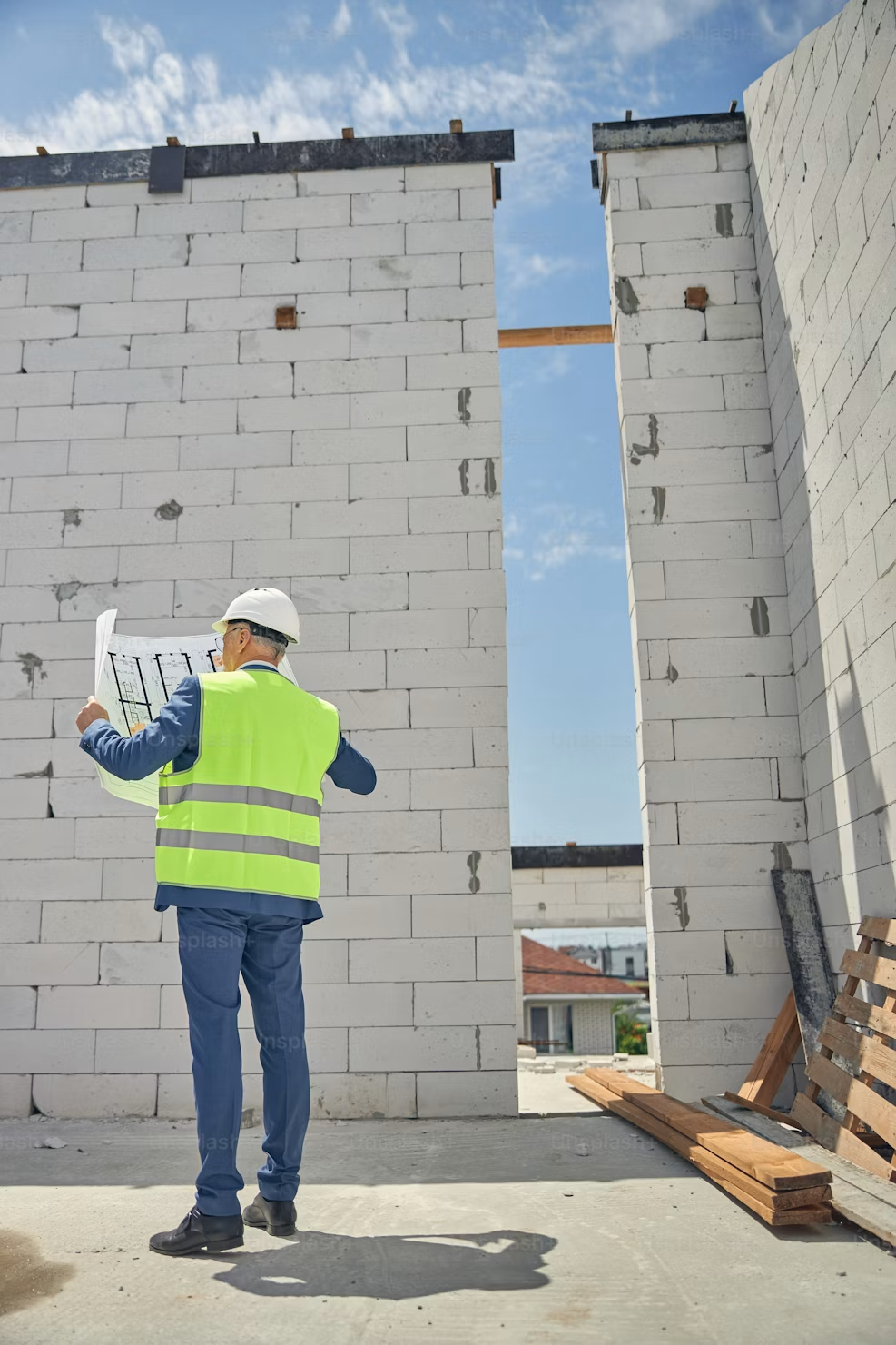
Construction remains one of the world’s least digitized industries, despite representing trillions of dollars in global economic activity. The industry's chronic inefficiencies stem from a stubborn disconnect between static digital planning environments and the rapidly shifting, chaotic reality of a physical job site. Visual tech is closing this gap.
Multimodal site copilots are emerging as operational intelligence layers tailored for site managers and field workers. These systems seamlessly blend visual feeds, LiDAR scans, project schedules, and sensor telemetry into a single, unified contextual reasoning system. Instead of manually digging through hundreds of pages of 2D blueprints or outdated documentation, teams can interact with natural language interfaces that understand both the exact geometry of the site and the real-time state of the project timeline.

Dareen Salama, Co-Founder and CEO of Gryps ©Robert Wright/LDV Capital
We have been investing early in this shift across the built industry. In March 2021, LDV Capital led Gryps’ $1.5M seed round to help modernize the construction industry with robotic process automation (RPA), agents, computer vision and AI. At the time, we recognized that one of the construction industry’s largest challenges was not a lack of data, but the fact that nearly all of it was fragmented across documents, emails, PDFs and disconnected software systems. Gryps is the intelligence layer for the built environment that continuously ingests information from across the construction lifecycle, transforms unstructured data into structured knowledge and enables owners and operators to instantly access critical project insights. As AI capabilities continue to advance, we believe platforms that connect, understand and act on the vast amount of information generated across construction projects will play an increasingly important role in enabling more intelligent, efficient and autonomous infrastructure delivery. We continue to believe strongly in visual tech & AI opportunities across construction and the broader built environment.
Manufacturing

While industrial robotics have populated factory floors for decades, they have largely been confined to highly structured factory environments and operated within predefined routines. Advances in visual navigation and spatial intelligence are allowing robots to break free from their tracks and operate safely in dynamic, unstructured settings alongside humans.
Beyond automation software, visual tech innovations at the molecular and nano-scale are redefining manufacturing at the material level itself. We are seeing the rise of engineered materials featuring programmable mechanical, thermal, and electronic properties. When monitored and handled by intelligent vision systems, these advanced materials pave the way for entirely new, self-assembling, or highly adaptive manufacturing methodologies.
In our 2019 Insights Report, we highlighted that manufacturing and logistics companies would need to rapidly adopt visual technology to improve quality, safety, flexibility and profitability. The report identified several themes that continue to compound today, including vision-enabled autonomous robots, vision-based quality assurance, light-based manufacturing and revolutionary materials produced through vision and light-based systems. Seven years later, these themes continue to prove relevant as AI, robotics, spatial intelligence and advanced sensing converge to unlock more adaptive autonomous manufacturing systems.
Mining
Historically, mining has operated with limited subsurface visibility and highly manual operational processes. The next generation of mining infrastructure is becoming increasingly autonomous, predictive, and data-driven.
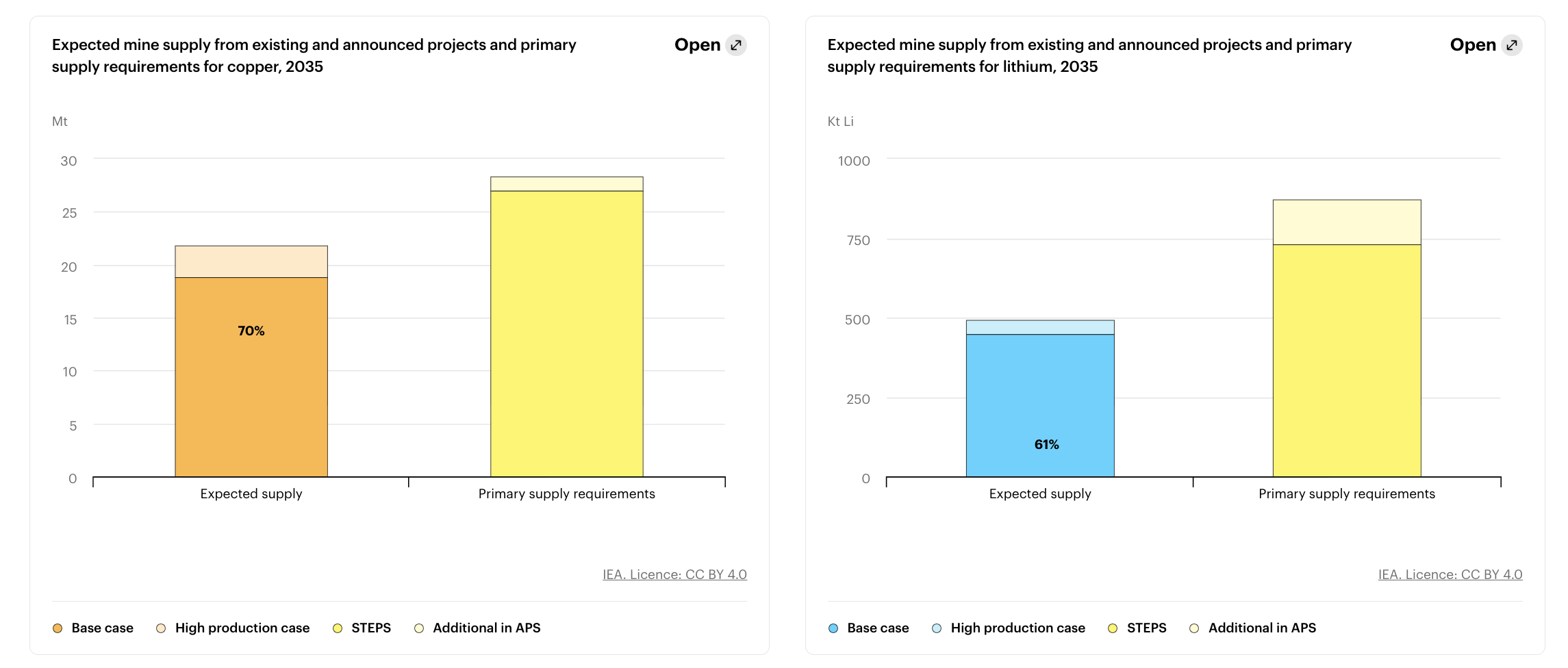
The timing is especially ripe as over the next decade, it is predicted that the demand for critical minerals will far exceed supply. According to the IEA’s Global Critical Minerals Outlook 2025, demand for key energy minerals continued to grow strongly in 2024. Lithium demand rose by nearly 30%, significantly exceeding the 10% annual growth rate seen in the 2010s. Demand for nickel, cobalt, graphite and rare earths increased by 6‑8% in 2024. This growth was largely driven by energy applications such as electric vehicles, battery storage, renewables and grid networks.
@IEA
AI-driven orebody intelligence is emerging as a foundational capability across the entire mining lifecycle—spanning exploration, geological modeling, extraction, and processing. By integrating disparate data streams like seismic data, drilling logs, hyperspectral imaging, and real-time operational telemetry, machine learning models can continuously refine subsurface mineral distributions with unprecedented precision, radically reducing the time and capital wasted on dry drills.
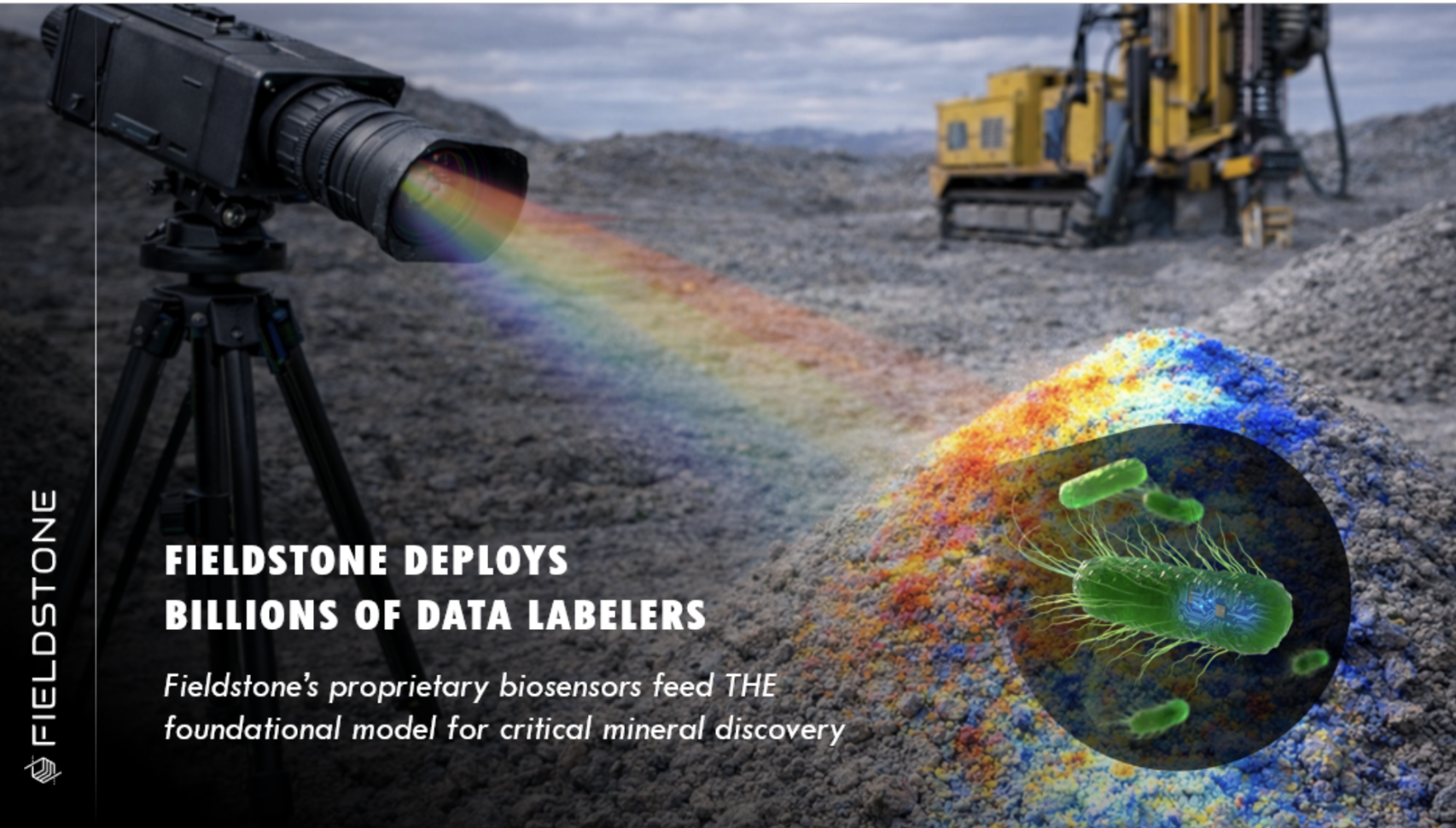
We are already seeing this opportunity emerge across our portfolio. In May 2025, LDV Capital invested in Fieldstone Bio’s $5M seed round to help advance their microbial sensing platform, which combines synthetic biology, hyperspectral imaging and AI to unlock environmental and chemical insights at massive scale. One of the main markets that Fieldstone Bio is focusing on is the mining industry with a unique approach to mineral discovery: using engineered microbial sensors to detect chemical signs in mining material and translate them into visual maps.
What connects logistics, construction, manufacturing, mining, and more industries is not simply automation - it is machine perception enabling intelligent automation.
For decades, software transformed digital workflows. The next decade will be defined by software that can perceive, interpret, and autonomously operate within the physical world.
Visual technology is the foundational layer that allows AI systems to understand real-world environments with increasing sophistication. Combined with advances in robotics, edge computing, simulation systems, and spatial intelligence, these technologies are creating entirely new categories of industrial infrastructure.
Let us know if you are either thinking of building or have already started building a startup leveraging visual technologies & AI to unlock the intelligent automation of legacy industries.